
Backyard Drainage Solutions in Contra Costa County.
Water management built around the whole property.
Family-owned since 1985, Pacheco Landscape & Pool Construction provides grading, site preparation, surface drains, area drains, channel drains, retaining-wall drainage, pool-area drainage, and backyard water-management solutions throughout Contra Costa County and selected East Bay communities.
We begin with a brief phone conversation about where the water collects, when the problem occurs, what has already been installed, visible site conditions, access, photos, plans, and whether the drainage concern is part of a larger outdoor project.
Drainage is one of the most important parts of outdoor construction.
Water that is not controlled properly can saturate soil, affect patios and pool decks, increase pressure behind retaining walls, create muddy areas, contribute to erosion, and make outdoor spaces difficult to use after heavy rain.
Built With the Whole Property in Mind
Drainage is not simply installing a drain where water happens to be standing. The collection point, pipe slope, capacity, cleanout access, surrounding grades, hardscape elevations, soil conditions, roof runoff, retaining walls, pool areas, and discharge location all matter.
We look at drainage as part of the complete outdoor construction system so the proposed work connects with the way the property is actually built.
We Don’t Compete on Lowest Price.
Drainage problems are often made worse by shortcuts: poor grading, shallow or improperly sloped pipe, undersized collection points, inaccessible systems, missing wall drainage, or water being moved into another problem area.
Our focus is practical water management, proper construction, responsible discharge planning, clear communication, and solutions based on the actual site conditions.
If you value addressing the cause instead of simply covering up the symptom, we would appreciate the opportunity to earn your trust.
Drainage must work with the pool, hardscape, walls, and structures.
These completed backyard projects show why water management, elevations, hardscape, pool decks, structures, landscaping, and site construction must be coordinated together.
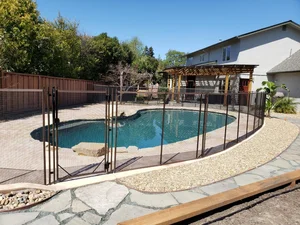
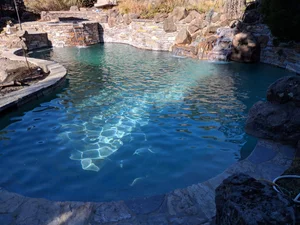
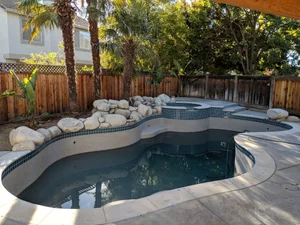
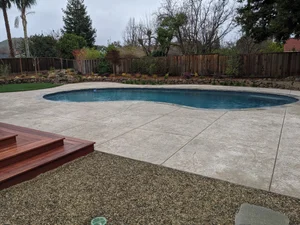
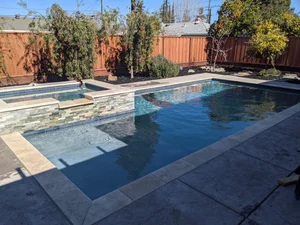
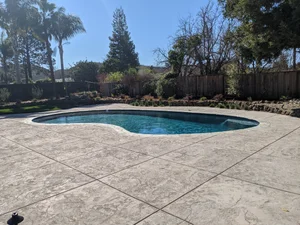
Drainage systems, grading, site preparation, and water management.
The appropriate solution depends on the source of the water, property elevations, soil, available fall, collection points, existing improvements, and where the water may legally and responsibly go.
Surface Drainage
Area drains, catch basins, surface collection points, channel drains, and grading adjustments used to collect and redirect surface water.
Hardscape Drainage
Drainage coordinated around patios, pool decks, walkways, concrete, outdoor kitchens, steps, structures, and finished elevations.
Retaining-Wall Drainage
Drain rock, drainage pipe, backfill, outlets, filter materials, and surface-water planning around retaining and structural walls.
Grading & Slope Correction
Site grading, soil movement, finished-elevation adjustments, swales, and water-flow planning to improve how runoff moves through the yard.
Pool & Yard Drainage
Drainage around pools, spas, equipment areas, auto-cover vaults, decks, lawns, patios, side yards, and outdoor living spaces.
Complete Site Work
Drainage and site preparation coordinated with pools, remodeling, hardscape, retaining walls, structures, utilities, and landscaping.
Drainage problems usually start with the way the property is built.
Standing water, muddy areas, saturated soil, wall pressure, heaving concrete, deck movement, erosion, and water flowing toward structures may be symptoms of a larger grading or water-management problem.
The solution is not always another drain. The property must be reviewed for elevations, existing systems, pipe fall, roof runoff, soil behavior, walls, hardscape, discharge options, and how water moves during a storm.
Our reputation is built one backyard at a time, including the drainage details that protect the finished work.
Source of the Water
Rainfall, roof runoff, neighboring elevations, irrigation, pool overflow, slopes, hardscape, and groundwater concerns may behave differently.
Collection Points
Drains should be located where water can reach them, not simply where installation is easiest or where a low spot happens to appear.
Pipe Fall & Routing
Pipe size, slope, turns, elevation, trench depth, conflicts, cleanouts, and the discharge point affect system performance.
Soil Conditions
Clay-heavy and expansive soils may absorb water slowly, hold moisture, expand, shrink, and affect surrounding concrete and walls.
Hardscape Elevations
Patios, decks, walkways, curbs, walls, doors, steps, and landscape borders can either support or block intended water movement.
Responsible Discharge
Water should not simply be moved toward a structure, unstable slope, neighboring property, public area, or another location that creates a new problem.
Access & Maintenance
Cleanouts, catch basins, grates, outlets, removable components, and accessible routes support future inspection and maintenance.
Construction Sequencing
Drainage should be installed before patios, decks, walls, structures, landscaping, and finish work make the system difficult to access.
Small water issues can become expensive outdoor problems.
Drainage issues often become visible after heavy rain, after new hardscape changes the natural flow, or when older systems no longer collect and discharge water effectively.
Common Warning Signs
- Standing water on patios, lawns, or side yards
- Water collecting near the home or outdoor structures
- Water flowing toward the pool instead of away from it
- Pool decks or concrete lifting, settling, or cracking
- Water collecting around retaining walls
- Muddy areas remaining wet long after rainfall
- Soil erosion or exposed roots
- Drain grates backing up during heavier storms
- Downspouts releasing water into sensitive areas
- Water entering an auto-cover vault or equipment area
- Staining or mineral deposits around drainage paths
- Water being redirected onto neighboring property
Practical Drainage Goals
- Identify where the water is coming from
- Collect runoff where it naturally reaches a low point
- Move water away from sensitive areas
- Reduce unnecessary soil saturation where practical
- Protect patios, pool decks, walls, and structures
- Improve backyard usability after rain
- Coordinate drainage with grading and hardscape
- Provide cleanout and maintenance access
- Use responsible discharge locations
- Avoid creating new problems elsewhere on the property
- Support long-term outdoor construction performance
- Plan for the actual storm-water path, not ideal conditions
Collecting water is only the first part of the system.
For a drainage system to function, water must reach the collection point, enter the system, travel through properly installed pipe, and discharge at a suitable location without creating another problem.
Collect
Grading and finished elevations must allow the water to reach an area drain, catch basin, channel drain, swale, or other intended collection point.
Convey
Pipe sizing, fall, depth, fittings, trench conditions, roots, utility conflicts, cleanouts, and total distance affect how water travels through the system.
Discharge
The outlet or approved destination must be appropriate for the property and must not direct water toward sensitive areas or create a new drainage concern.
Observe the problem. Plan the flow. Build the solution.
Drainage work should be based on the property rather than guesswork. Every situation is different, but most projects move through these major evaluation and construction stages.
Initial Conversation
We discuss where the water collects, when the issue occurs, how long it remains, what has changed, and whether the concern connects to a larger project.
Photos & Background
Photos during or shortly after rain, plans, prior drainage work, downspout locations, property history, and known conditions can provide valuable information.
Site Review
We review visible grades, slopes, hardscape, walls, pool areas, structures, soil, drains, outlets, access, and potential water paths.
Recommended Scope
We prepare a practical scope based on what appears to be occurring, the intended improvement, accessible discharge options, and the existing yard.
Preparation & Trenching
Work areas are opened, elevations are established, utilities are considered, and trenching, excavation, grading, or demolition begins.
Drainage Installation
Drains, basins, pipe, wall drainage, grading adjustments, outlets, backfill, cleanouts, and related site work are installed.
Hardscape & Site Tie-Ins
Concrete, pool decks, patios, landscaping, walls, structures, and other disturbed areas are connected to the drainage work as required.
Final Review
We review the completed work, cleanup, visible flow paths, maintenance access, and the intended purpose of the installed system.
Drainage solutions for Contra Costa County properties.
East Bay properties can involve expansive clay soils, hillside runoff, tight side yards, older drainage systems, established hardscape, retaining walls, pool decks, mature landscaping, and improvements installed at different times without one complete water-management plan.
Expansive Soil & Saturation
Clay-heavy soil can absorb water slowly, remain saturated, expand when wet, shrink as it dries, and contribute to movement in patios, walkways, pool decks, walls, and outdoor structures.
Drainage cannot eliminate expansive-soil behavior, but responsible water management may help reduce unnecessary or concentrated saturation in sensitive areas.
Learn more about our Contra Costa County construction experience .
Connected to the Whole Backyard
Drainage works best when pool decks, patios, walkways, retaining walls, roof runoff, landscape areas, outdoor kitchens, structures, gates, equipment areas, and finished grades are considered together.
When water management is coordinated before the finished work is installed, the system can be integrated more cleanly and efficiently.
Quality over volume. Reputation over shortcuts.
Homeowners choose Pacheco Landscape & Pool Construction because they want drainage and outdoor work evaluated carefully, communicated clearly, and coordinated with the complete property.
Family-Owned Since 1985
Our company has been built through reputation, referrals, repeat clients, and the pride that comes from putting the Pacheco name on every project.
Owner-Operated
We are intentionally structured to remain personally involved, focused on quality, and accountable to the homeowners who trust us.
Detailed Proposals
Our line-by-line proposals help homeowners understand the visible scope, excavation, materials, drainage components, tie-ins, and major assumptions.
Complete Outdoor Construction
Drainage, grading, hardscape, pools, outdoor living, retaining walls, utilities, structures, and landscaping can be coordinated.
Properly Licensed
California Contractor License #987689 with B General Building, C-53 Swimming Pool, and C-27 Landscaping classifications.
Built for Practical Performance
We focus on collection, pipe fall, access, discharge, maintenance, grading, quality materials, and connection to the surrounding yard.
Common questions about backyard drainage and site work.
These are some of the questions homeowners commonly ask before addressing standing water, grading, retaining-wall drainage, pool-area drainage, or larger outdoor site work.
Do you install backyard drainage systems?
Yes. We install drainage solutions such as area drains, catch basins, channel drains, surface drainage, grading improvements, retaining-wall drainage, pool-area drainage, and systems connected to larger outdoor construction projects.
Do you take small drainage-repair projects?
Project fit depends on the location, access, scope, cause of the problem, existing construction, required investigation, and whether the work connects to hardscape, grading, walls, pools, or a larger backyard project.
We begin with a phone conversation and photos so we can determine whether the concern fits the type of construction work we perform.
Why is drainage important around pools and hardscape?
Poor drainage can saturate soil, affect concrete and pool decks, increase pressure behind retaining walls, create standing water, and send water toward structures or equipment areas. Drainage should be considered before finished surfaces are installed.
Can drainage prevent concrete or pool decks from moving?
Drainage may help reduce unnecessary saturation, but it cannot guarantee that concrete, pool decks, walls, pools, or structures will never move.
Soil type, expansive-soil behavior, moisture changes, preparation, reinforcement, roots, loading, existing construction, groundwater, and other conditions can affect movement.
Can drainage help with clay or expansive soil?
Drainage cannot change the soil type. Proper water management may help reduce unnecessary or concentrated saturation and support better long-term performance of hardscape, walls, pool areas, and outdoor structures.
Why not simply install a dry well?
A dry well depends on the surrounding soil’s ability to accept and disperse water. Soil with slow infiltration, heavy clay, high saturation, groundwater concerns, limited capacity, or difficult maintenance access may not perform the same as free-draining soil.
The correct collection and discharge method must be evaluated for the individual property rather than assumed.
Can you connect new drains to an existing drainage system?
Sometimes, but the existing route, pipe size, condition, slope, capacity, cleanout access, outlet, and responsibility for the system should be evaluated before additional water is connected.
Do you handle retaining-wall drainage?
Yes. Retaining-wall drainage may include drain rock, filter materials, drainage pipe, backfill, outlets, surface-water management, and related grading. Structural or engineered walls are built from approved plans when professional design is required.
Do you handle grading and site preparation?
Yes. We handle grading, slope adjustments, site preparation, excavation-related work, drainage coordination, hardscape tie-ins, and related outdoor construction.
Does PLAPCO provide civil or drainage engineering?
PLAPCO is the construction contractor. We construct drainage and site improvements from approved plans and coordinate with the homeowner’s selected civil engineer, geotechnical engineer, architect, landscape designer, surveyor, or other licensed professional when their services are required.
Can you guarantee that a yard will never have standing water?
No responsible contractor can guarantee performance under every storm, maintenance condition, soil condition, neighboring runoff event, groundwater condition, blocked outlet, or future property change.
The goal is to install a practical system based on the observable site conditions, intended design capacity, available drainage path, and defined construction scope.
Are you the cheapest drainage contractor?
No. We do not try to compete on the lowest bid. We focus on practical planning, proper construction, responsible discharge, clear communication, detailed proposals, and work designed around the actual property.
What areas do you serve?
We serve Walnut Creek, Pleasant Hill, Danville, Lafayette, Orinda, Moraga, Blackhawk, Concord, Clayton, Alamo, Martinez, and selected communities throughout Contra Costa County and the East Bay.
Dealing with standing water or a larger drainage concern?
Start with a brief phone conversation about where the water collects, when the issue occurs, what has already been installed, whether recent construction changed the grades, and what you are considering. Photos taken during or shortly after rainfall are especially helpful.
Family-owned since 1985 • Owner-operated • License #987689
Serving Contra Costa County and selected East Bay communities.