
Pool and Backyard Construction Questions, Answered.
Clear information before construction begins.
Answers about custom pools, hillside and pier-supported construction, pool remodeling, waterline tile, outdoor living, hardscape, drainage, pool houses, ADUs, plans, permits, pricing, timelines, and working with Pacheco Landscape & Pool Construction.
We begin with a brief phone conversation to understand the property, project type, plans, timing, access, approximate investment, and known site conditions before scheduling an on-site consultation.
Good projects start with clear expectations.
Major pool and backyard projects involve more than attractive finishes. Plans, engineering, soil, access, drainage, structural conditions, utilities, permits, inspections, materials, sequencing, and hidden construction details can all affect the final project. These answers explain how we approach that work and what homeowners should understand before construction begins.
The answers matter because every backyard is different.
Pools, patios, walls, slopes, structures, utilities, drainage, soil, access, and existing improvements must work together as one complete construction system.

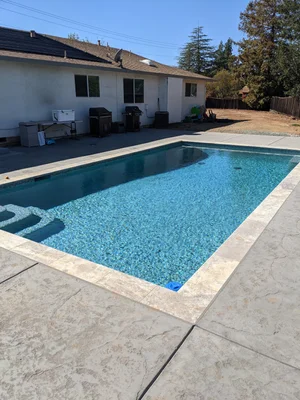
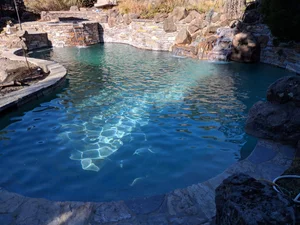
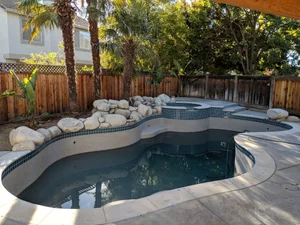

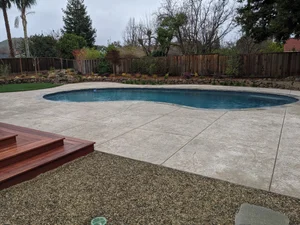
About PLAPCO and the projects we build.
What does Pacheco Landscape & Pool Construction build?
We build custom gunite pools, spas, hillside and pier-supported pools, pool remodels, outdoor kitchens, outdoor living spaces, patios, pool decks, hardscape, retaining walls, drainage systems, grading, pool houses, ADUs, and complete backyard construction projects.
When was PLAPCO established?
Pacheco Landscape & Pool Construction was established in 1985. The company has grown through reputation, referrals, repeat clients, craftsmanship, and accountability.
Is PLAPCO family-owned?
Yes. PLAPCO is family-owned and owner-operated. Pacheco is our family name, and we take personal pride in the work carrying that name.
Are you licensed, bonded, and insured?
Yes. Pacheco Landscape & Pool Construction is licensed, bonded, and insured. Our California Contractor License is #987689 with B General Building, C-53 Swimming Pool, and C-27 Landscaping classifications.
Are you the cheapest pool builder or outdoor contractor?
No. We are not trying to be the cheapest contractor. There will always be someone willing to present a lower number.
Our focus is quality construction, detailed proposals, experienced oversight, proper preparation, clear communication, and long-term performance.
Who is PLAPCO best suited for?
We are best suited for homeowners planning a substantial pool, remodel, outdoor living, hardscape, drainage, pool house, ADU, hillside, or complete backyard project.
We are a good fit for customers who value craftsmanship, communication, realistic expectations, and having the work built correctly rather than simply choosing the lowest bid.
Does PLAPCO provide architectural design or engineering?
PLAPCO is the construction contractor. We build from approved plans and coordinate construction details with the homeowner’s selected designer, architect, structural engineer, civil engineer, geotechnical engineer, surveyor, energy consultant, or other licensed professional when their services are required.
New pools, spas, equipment, and complete backyard planning.
Do you build new custom swimming pools?
Yes. We build custom gunite swimming pools, spas, water features, equipment systems, automation, tile, coping, interior finishes, hardscape, drainage, and complete pool environments throughout Contra Costa County and selected East Bay communities.
Learn more on our Custom Pool Construction page .
How much does a custom pool cost?
Custom pool pricing depends on the pool size, depth, shape, access, excavation, soil conditions, engineering, structural requirements, tile, coping, interior finish, equipment, automation, drainage, utilities, hardscape, retaining walls, outdoor living features, and overall project scope.
A generic square-foot price does not account for the actual construction conditions. A proper proposal should be based on the plans, property, access, materials, quantities, and clearly defined scope.
How long does it take to build a custom pool?
Timing depends on plans, engineering, permit review, corrections, inspections, access, weather, soil conditions, utility work, material selections, project complexity, and the amount of connected backyard construction.
A straightforward pool is different from a hillside pool, pier-supported pool, or complete backyard project involving walls, drainage, structures, hardscape, and outdoor living.
Do I need completed plans before contacting you?
Not always. We can have an initial conversation while you are considering the project or working with your selected designer or engineer.
Detailed construction pricing generally requires sufficiently complete plans, defined quantities, known site conditions, equipment information, structural details, and identified selections or allowances.
Do you handle pool permits?
We help coordinate construction-related permit submittals, correction responses, approved plans, engineering requirements, inspections, and project documents for the work we perform.
Requirements vary by jurisdiction, property, project type, soil conditions, slopes, utilities, and the agencies involved.
Can you build the surrounding backyard at the same time?
Yes. We can coordinate the pool with hardscape, patios, pool decks, outdoor kitchens, fire features, drainage, retaining walls, lighting, landscaping, pool houses, and other approved improvements.
Complex properties require site-specific construction.
Do you build hillside swimming pools?
Yes. We build hillside and technically complex pools involving slopes, difficult access, retaining conditions, specialized excavation, drainage, structural engineering, geotechnical recommendations, piers, grade beams, and additional inspections.
Learn more on our Hillside Pool Construction page .
What is a pier-supported swimming pool?
A pier-supported pool uses deep structural elements to transfer the pool load through weaker, expansive, filled, or unstable near-surface soil to deeper material identified by the project engineer or geotechnical professional.
Pier depth, diameter, spacing, reinforcement, grade beams, shell connections, and installation methods are determined by the approved site-specific engineering. Piers are not a generic upgrade and should not be added or omitted without professional evaluation.
Does every hillside pool require piers?
No. A sloped property does not automatically mean that piers are required, and a relatively flat property does not automatically mean that conventional support is appropriate.
The correct foundation system depends on the soil, fill, slope, groundwater, loading, nearby walls, property history, geotechnical recommendations, structural design, and approved plans.
When is geotechnical or structural engineering required?
Professional evaluation may be required when a property involves slopes, fill, expansive or weak soil, landslide concerns, groundwater, retaining walls, surcharge, unusual loads, nearby structures, deep foundations, or conditions identified by the reviewing agency.
PLAPCO constructs from the approved site-specific plans and coordinates with the homeowner’s selected professionals.
What does site-specific pool engineering mean?
Site-specific engineering means the pool and supporting construction are designed for the actual property rather than relying only on typical details.
The plans may address the pool shell, piers, grade beams, retaining walls, drainage, soil recommendations, surcharge, foundations, equipment pads, utility crossings, and other property-specific conditions.
Learn more on our Site-Specific Pool Engineering page .
How does difficult access affect pool construction?
Narrow side yards, slopes, stairs, walls, occupied homes, neighboring properties, overhead restrictions, limited staging, and long material routes can affect excavation, concrete placement, equipment selection, labor, safety, scheduling, and cost.
Why is drainage especially important on hillside properties?
Water moving across or through a slope can affect soil saturation, erosion, wall pressure, access, foundations, hardscape, and neighboring properties.
Surface drainage, subsurface recommendations, wall drainage, roof runoff, pool overflow, deck drainage, and approved discharge locations should be coordinated with the complete project.
Piers are not simply “extra concrete.”
Pier-supported construction involves engineering, drilling, reinforcement, concrete placement, inspection access, tolerances, grade-beam or shell connections, and coordination with the approved structural and geotechnical requirements. The pier system must be built as part of the complete engineered foundation system.
Explore Hillside Pool ConstructionRefinishing, tile, coping, equipment, and complete renovations.
Do you remodel existing pools?
Yes. Pool remodeling can include interior finishes, waterline tile, coping, pool equipment, lighting, plumbing, automation, deck replacement, drainage, structural repairs, and complete backyard renovations.
Learn more on our Pool Remodeling page .
Why does PLAPCO recommend replacing waterline tile when refinishing a pool?
We recommend replacing the waterline tile whenever a pool is refinished because the finish, tile, grout, bond beam, and waterline transition function as one complete system.
Even when older tile still looks acceptable, the grout and bond behind it may be approaching the end of their usable life. Tile and grout are exposed continuously to water, chemicals, sun, movement, and temperature changes.
A new pool finish meets and slightly overlaps the bottom edge of the tile line. Replacing the tile allows that transition to be reset correctly and helps create a cleaner, more reliable connection between the new finish and waterline.
Leaving old tile can also create a future risk. If the tile or grout fails after the new finish is installed, removing the old tile later can chip, crack, or damage the new surface. Failed grout may also allow water behind the tile and affect the bond beam or concrete shell.
Replacing the tile during the remodel also creates a cleaner appearance, easier long-term maintenance, and a more complete renovation rather than connecting a new long-term finish to an older weak point.
Can you replace coping during a pool remodel?
Yes. Coping can be replaced as part of the remodel. The existing coping, bond beam, tile line, deck, drainage, expansion joint, and surrounding hardscape should be reviewed together before the scope is finalized.
Do you upgrade pool equipment?
Yes. Remodels can include pumps, filters, heaters, automation, valves, plumbing improvements, lighting, sanitizing systems, equipment pads, electrical work, and related upgrades depending on existing conditions.
Can you remodel the pool and surrounding backyard together?
Yes. Many remodels involve more than the pool surface. We can coordinate pool work with patios, pool decks, drainage, outdoor kitchens, retaining walls, lighting, landscaping, and other outdoor improvements.
What hidden conditions can be discovered during a pool remodel?
Demolition may expose damaged bond beams, failing tile bond, hollow coping, corroded reinforcement, leaking plumbing, damaged skimmers, inadequate bonding, deteriorated concrete, previous repairs, buried utilities, or other conditions that were not visible before the work began.
Hidden conditions must be evaluated after they are exposed and may require additional work beyond the original visible scope.
What should I know before removing concrete around an existing skimmer?
Demolition near an existing skimmer can expose or damage the skimmer body, throat, plumbing connections, bond beam, coping, electrical bonding, and surrounding pool structure.
If the existing skimmer is brittle, damaged, poorly bonded, or affected during demolition, replacement or additional repair work may be required. New deck work around a pool must also be coordinated with the required electrical bonding and expansion-joint details.
What is equipotential bonding around a swimming pool?
Equipotential bonding connects conductive components around the pool to reduce electrical voltage differences. Depending on the project and applicable requirements, the bonded system may include reinforcing steel, deck bonding, pool equipment, metal components, water bonding, and other conductive items.
When concrete or decking is removed and replaced around an existing pool, the bonding conditions must be evaluated and restored as required.
Patios, kitchens, walls, concrete, and complete backyards.
Do you build outdoor kitchens and outdoor living spaces?
Yes. We build outdoor kitchens, BBQ islands, patios, fire features, poolside living spaces, covered areas, utilities, lighting, hardscape, and complete outdoor environments.
Learn more on our Outdoor Living page .
Do you build patios, pool decks, and walkways?
Yes. We build patios, pool decks, walkways, concrete areas, steps, landings, equipment pads, outdoor-kitchen pads, seating areas, fire-feature areas, and connected hardscape.
Do you build retaining walls?
Yes. We build retaining walls, seat walls, garden walls, and grade transitions.
Depending on wall height, slope, surcharge, nearby structures, soil, location, and jurisdiction, the project may require engineering, approved plans, drainage details, permits, and inspections.
Can you guarantee that exterior concrete will never crack?
No responsible contractor can guarantee that exterior concrete will never crack.
Concrete is affected by shrinkage, temperature, soil movement, moisture, expansive clay, slab geometry, loading, roots, existing conditions, and other factors. Proper preparation, reinforcement, thickness, drainage, control joints, and expansion planning help manage the risk but cannot eliminate every possibility of movement or cracking.
Why are control joints and expansion joints important?
Control joints help influence where shrinkage cracking may occur. Expansion or isolation joints help separate concrete from pools, structures, columns, walls, and other elements that may move differently.
Joint placement must be coordinated with the slab geometry, pool shell, coping, structures, existing concrete, and intended use.
Does PLAPCO provide landscape design?
PLAPCO is the construction contractor. We build from approved plans and coordinate construction details with the homeowner’s selected landscape designer, architect, engineer, or other licensed professional when their services are required.
Water management, grading, clay soil, and site conditions.
Why is drainage important in backyard construction?
Poor drainage can saturate soil, increase pressure behind retaining walls, create erosion, affect pool decks and hardscape, cause standing water, and send runoff toward homes, structures, pools, equipment, or neighboring properties.
Drainage should be planned as part of the complete outdoor construction system rather than treated as an afterthought.
What drainage systems does PLAPCO install?
Depending on the project, we install area drains, catch basins, channel drains, surface drainage, grading improvements, retaining-wall drainage, pool-area drainage, yard drainage, pipe systems, outlets, cleanouts, and related site work.
Learn more on our Drainage Solutions page .
Can drainage prevent concrete, pool decks, or structures from moving?
Drainage may help reduce unnecessary or concentrated soil saturation, but it cannot guarantee that concrete, pool decks, walls, pools, or structures will never move.
Soil type, expansive-soil behavior, moisture changes, compaction, reinforcement, roots, loading, groundwater, existing construction, and other conditions may still affect movement.
Can drainage solve expansive clay soil?
No. Drainage cannot change the underlying soil type. Clay-heavy and expansive soils may absorb water slowly, remain saturated, expand when wet, and shrink as they dry.
Responsible water management may help reduce unnecessary concentration of water in sensitive areas, but it does not eliminate expansive-soil behavior.
Why is a dry well not always the right drainage solution?
A dry well depends on the surrounding soil’s ability to accept and disperse water. Heavy clay, slow infiltration, already saturated soil, groundwater, limited storage capacity, or a blocked discharge path can reduce performance.
When a dry well fills and the surrounding soil cannot accept additional water, water may back up through connected piping or remain stored near the installation. The correct drainage approach must be evaluated for the individual property rather than assumed.
Can you guarantee that a yard will never have standing water?
No responsible contractor can guarantee performance under every storm, soil condition, neighboring runoff event, groundwater condition, blocked outlet, maintenance condition, or future property change.
The goal is to install a practical system based on the observable conditions, intended design capacity, available drainage path, and defined construction scope.
Where can drainage water be discharged?
The appropriate discharge location depends on the property, available elevations, local requirements, existing systems, soil conditions, easements, public improvements, and surrounding properties.
Water should not simply be redirected toward a structure, unstable slope, neighboring property, or another area that creates a new problem.
Does PLAPCO provide civil or drainage engineering?
PLAPCO is the construction contractor. When civil, geotechnical, structural, surveying, or other professional design is required, we construct from the approved documents and coordinate construction details with the homeowner’s selected professionals.
Backyard structures, utilities, permits, and residential space.
Do you build pool houses and ADUs?
Yes. We build pool houses, cabanas, guest suites, home offices, accessory structures, detached ADUs, attached ADUs, and eligible conversion projects from approved plans.
Learn more on our Pool House and ADU Construction page .
What is the difference between a pool house and an ADU?
A pool house is generally an accessory structure serving the pool or backyard and may include changing space, storage, bathrooms, entertainment areas, or a kitchenette depending on the approved use.
An ADU is an independent dwelling with permanent provisions for living, sleeping, cooking, eating, and sanitation. It must be planned and permitted for residential occupancy.
Can a pool house include a bathroom or kitchenette?
It may, depending on the approved use, plans, utilities, building requirements, and local regulations. Plumbing, cooking facilities, sleeping areas, and the proposed use can affect how the structure must be reviewed and permitted.
Can I build a pool house now and convert it into an ADU later?
That should not be assumed. A future ADU conversion may require different foundations, insulation, energy compliance, electrical capacity, plumbing, fire and life-safety features, windows, ventilation, setbacks, room dimensions, and residential approvals.
Future residential use should be discussed with the homeowner’s selected architect or designer before the original plans are completed.
Will my existing utilities support an ADU?
That must be evaluated for the individual property. Existing electrical service, panel capacity, water supply, sewer or septic conditions, gas, meters, trenching, utility routes, and agency requirements can affect the plans and construction cost.
Do ADU requirements vary between cities?
Yes. State standards apply, but project-specific requirements may still depend on the property, type of ADU, objective local standards, building code, utilities, fire requirements, septic conditions, easements, and other reviewing agencies.
Working with Pacheco Landscape & Pool Construction.
What is the first step?
The first step is a brief phone conversation. We want to understand the project type, property location, goals, scope, planning stage, approximate investment, timing, access, and whether plans, photos, surveys, or engineering already exist.
Why do you require a phone conversation before a site visit?
A phone conversation helps determine whether the location, scope, planning stage, approximate investment, and construction needs fit the type of projects we perform.
It also allows us to identify what information should be reviewed before either side commits time to an on-site consultation.
Why do you ask about the project budget?
An approximate investment range helps determine whether the desired scope, site conditions, materials, engineering, structures, hardscape, and other features are reasonably aligned before significant time is spent preparing plans or pricing.
Do you provide detailed proposals?
Yes. We use a line-by-line approach so homeowners can better understand what is included, excluded, allowed, optional, or dependent on existing conditions.
Detailed proposals also make it easier to evaluate scope changes during the project instead of relying on one large combined number.
Can you review another contractor’s proposal?
We may review available plans and proposals while evaluating a project. Contractors often measure, organize, qualify, and price scopes differently.
A meaningful comparison requires reviewing what is included, excluded, combined, assumed, allowed, or left undefined—not simply comparing the total price.
What areas do you serve?
We serve Walnut Creek, Pleasant Hill, Danville, Lafayette, Orinda, Moraga, Blackhawk, Concord, Clayton, Alamo, Martinez, and selected communities throughout Contra Costa County and the East Bay.
Do you provide pool cleaning, weekly service, or small repair calls?
Our focus is construction, remodeling, and substantial outdoor projects. We are generally not the right fit for routine pool cleaning, weekly maintenance, handyman work, minor service calls, or small one-off repairs unless they are connected to a larger construction or remodel project.
Why choose PLAPCO?
Homeowners choose PLAPCO because the company was established in 1985, remains family-owned and owner-operated, holds multiple California contractor classifications, and focuses on quality construction over volume.
Our reputation is built one backyard at a time.
Have a project worth building correctly?
Whether you are planning a custom pool, hillside or pier-supported pool, pool remodel, outdoor living space, hardscape project, drainage improvement, pool house, ADU, or complete backyard transformation, start with a brief phone conversation about the property and project.
Established in 1985 • Family-owned • Owner-operated
Info@PLAPCO.com • 925-276-2106 • License #987689